

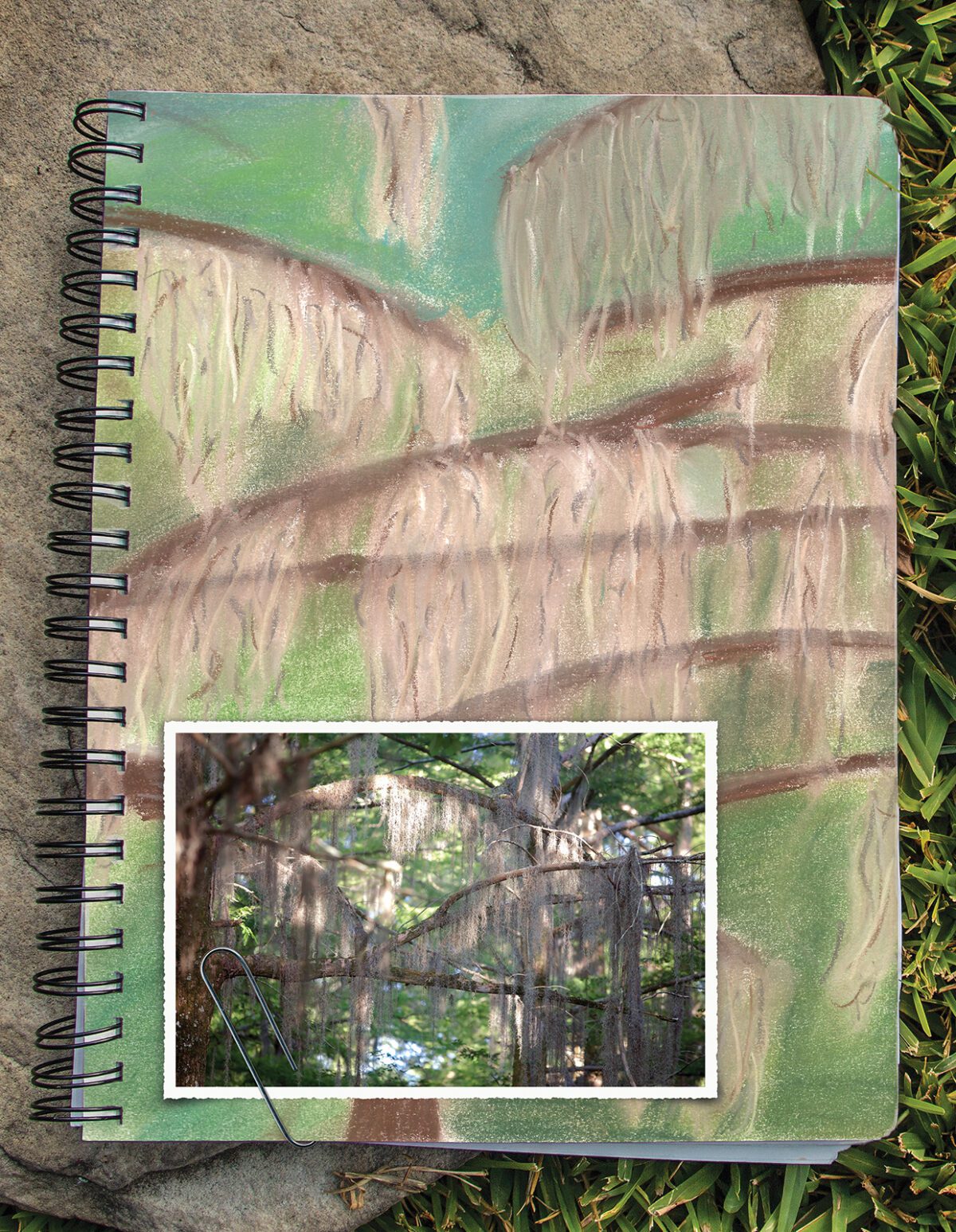
A plant characteristic to the Southeast, Spanish moss (Tillandsia usneoides) is a staple of old plantation homes and sloughs and swamps.
The unique vista it provides — regardless of where you discover it — brings a sense of tranquility.
These mosses are epiphytes, which means they make their own food, and they live only on trees, using none of the tree’s resources except their ideal growing medium — damp, loose bark. I’m often asked to look at a tree covered with Spanish moss that appears to be dying. Usually, the tree is dying but the moss is not the cause, although its thick mats block some sunlight. Instead, the moss takes advantage of loosened bark as the tree begins to die.
The history of uses for Spanish moss by humans is diverse, with the inner, black fibers once commercially ginned, much like cotton, and used for stuffing pillows, mattresses and even the seat cushions in Model-T Fords. Traditional voodoo dolls also once were filled with Spanish moss fibers.
The uses of Spanish moss are endless. It often is used for mulch or in planters to retain moisture and prevent weedy growth. Also, it is used extensively for arts and crafts projects. In nature, many bird species use the moss for nesting comfort and many small insects, including a small jumping spider that has been found only in Spanish moss, use it as their homes. Hence, before bringing Spanish moss into your home, use caution and wash the plant with a mild detergent or dish soap.
Spanish moss is an incredible plant. Although it has a specific preference for bald cypress and live oaks, it does occur on other trees, including oaks, cedars and even crepe myrtles.
As the winter months approach and the humid summer temperatures begin to fade, explore natural areas with expansive amounts of Spanish moss. They afford some of our most scenic, treasured and tranquil natural areas in this wonderful state.
STORY Nathan Beane
PHOTOGRAPHY Melanie Thortis
ILLUSTRATION Kimberly Eady
