

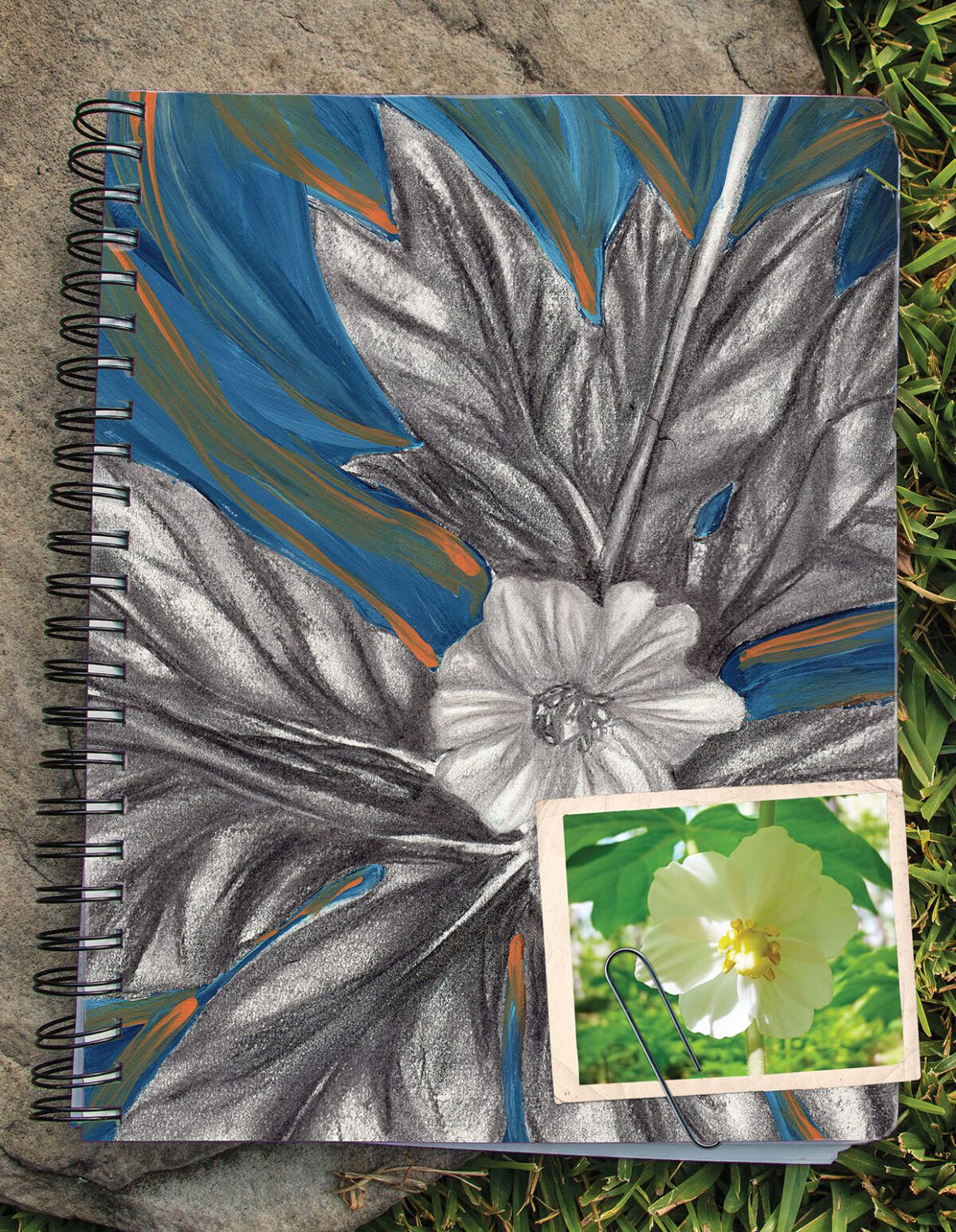
Whether you’re putting the stalk on a springtime gobbler or walking through the woods with family or friends, you’ve likely stumbled upon this Mississippi wildflower.
Unmistakably unique and with a beautiful white flower, the mayapple (Podophyllum peltatum) is a herbaceous plant you can readily identify.
Mayapples occur in small to large colonies within upland and lowland forests, and walking into a woodlot where hundreds of individuals are present is a neat find. Mayapples prefer partial shade and thrive in hardwood stands in many parts of the state.
As the adage goes, “Don’t miss the forest for the trees,” and with this plant, you would surely miss out if you did.
Mayapples have a unique history, and increased interest has been given to this plant because of its edible fruit and otherwise poisonous parts. Even the immature fruit is considered toxic, so use caution before you decide to live off the land and start eating them. Mayapples possess chemical properties used in topical medicine and have been considered an important plant for cancer research in recent years.
Historically, American Indians are noted using the mayapple for its purgative properties, with the dried rootstock made into a tea that when consumed would kill intestinal worms because of its toxicity.
To identify a mayapple is easy. Each leaf is suspended on a stalk in the center of the leaf. Botanically speaking, this is termed peltate, and it makes the plant appear like an umbrella, with a large-lobed leaf, or pair of leaves, suspended 12-15 inches from the ground. If you see only one leaf per plant you are looking at an immature plant. It won’t flower. But once mature, mayapples will possess two leaves, and right at the junction of each leaf stalk is where the flower comes each spring.
Mayapple blooms are delicate and protected by the plant’s large, umbrella-shaped leaves. The flowers typically reveal themselves in April at our property, although as you go north in latitude, flowering in May is the norm — hence the name “mayapple.”
The flowers are quite remarkable and the petals appear dipped in a glossy wax. After fertilization, often from bumblebees, the mayapple fruit is produced and will mature throughout summer. The fruit, when ripe will turn a golden yellow and gives rise to another common name — wild lemon.
When the summertime heat reaches full steam, mayapples wither to the ground, and thus are available for only a short window of time. If you have a chance to look for this plant, seek it out. If you know where some occur currently, take a closer look. They are sure to impress.
BY Nathan Beane
PHOTOGRAPHY Nathan Beane
ILLUSTRATION Mary Kalusche
