

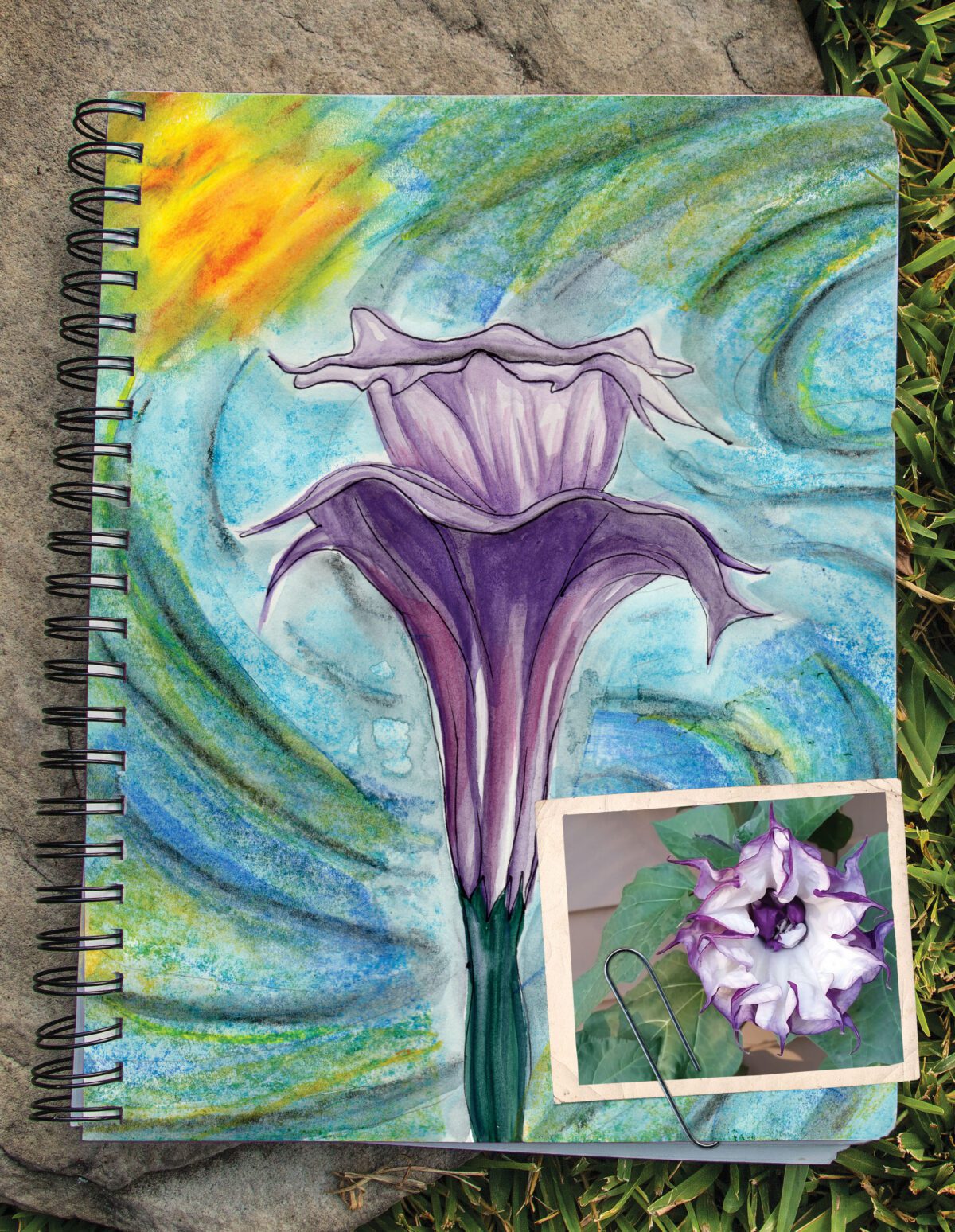
While most gardeners are familiar with the horticultural plant known as Angel’s Trumpet (Brugmansia), the Devil’s Trumpet or Black Daturas (Datura) is, perhaps, not as well-known. With a broad range of colors and cultivars available, the Angel’s Trumpets are typically woody shrubs with pendulous, trumpet-shaped flowers that are bright and showy. The Devil’s Trumpets, on the other hand, are tall-growing annuals with erect flowers and a dark side — ebony-colored stems with a double corolla that is a deep purple outside and creamy white inside.
The Devil’s Trumpet plants I grow are Datura metel var. fastuosa, or more simply, Double-flower Purple Datura. These plants, although they wither to the ground each year, attain heights of five feet or more and bloom magnificently from mid-summer until the first frost.
Although up close these plants produce an unfavorable pungent odor if touched, at night they release a pleasant fragrance that attracts moths to their huge flowers. The moth visitors have specialized mouthparts to reach deep inside the long, tubular flowers for nectar — their reward for pollination. And pollination is important, as this is the only way to get seeds for regeneration the following year. (Use caution, though, where you store the seeds as they are highly poisonous!) Although Angel’s Trumpets are also poisonous if ingested, the Devil’s Trumpet is an immediate relative to a common plant, known as Jimsonweed (Datura stramonium). This barnyard weed has been the culprit to livestock poisoning and, because of tropane alkaloids within the plant, extreme hallucinations and erratic behavior due to poisoning have been recorded. Jimsonweed also is called Jamestown weed, because the British soldiers — posted there to stop the Rebellion of Bacon in 1676 — were accidentally fed boiled parts of the plant in a salad.
Described in The History and Present State of Virginia (1705), Robert Beverly stated that the British soldiers presented “a very pleasant comedy, for they turned natural fools upon it for several days,” and that, “In this frantic condition, they were confined, lest they should, in their folly, destroy themselves — though it was observed that all their actions were full of innocence and good nature… After 11 days returned themselves again, not remembering anything that had passed.”
I’ve never had any issues with cats, dogs and chickens around, but history shows this is a plant to partake only aesthetically. If you want an edible garden, this plant isn’t for you; but, because the plant has a pungent odor when touched, most animals won’t eat it. Devil’s Trumpets will add beauty to your yard, they are drought-resistant and deer won’t mow them down as they do other yard plants. Look for seeds online or contact me at outside@ thesipmag.com/ for additional information on where to find seed. Happy gardening!
BY Nathan Beane
PHOTOGRAPHY Nathan Beane
ILLUSTRATION Mary Kalusche
