

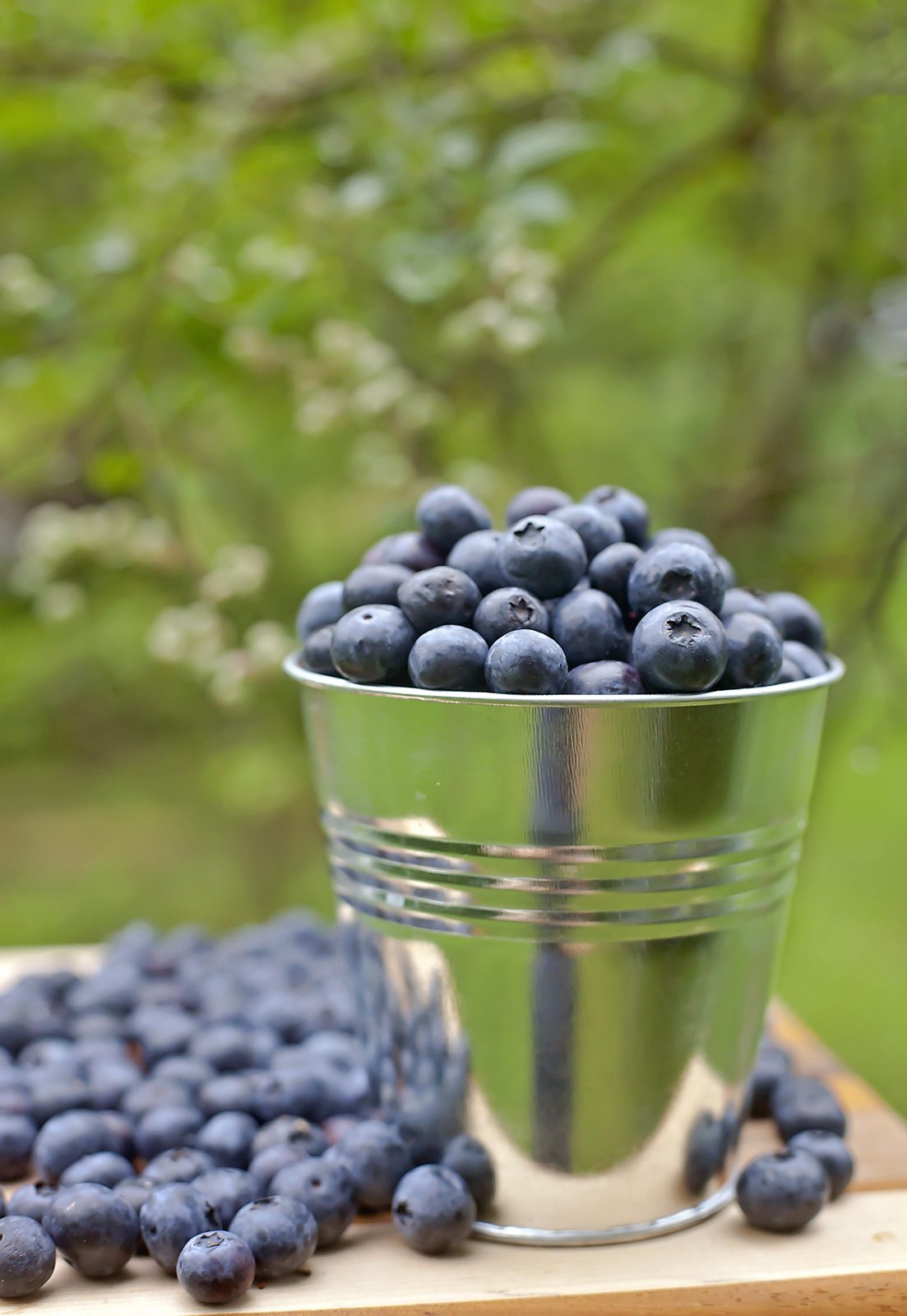
Enjoy a handful of fresh blueberries, and you'll taste the sweetness of a Mississippi summer.
Photographs by Melanie Thortis
RAYMOND – Mother of five Susan Branson of Madison never misses a blueberry-picking season with her children at Pecan Hill Farms.
“I grew up berry-picking with my family. It’s such a good family summer activity that I wanted to carry on with my children,” she said.
Creating a fresh outdoor experience for Mississippi families is partly what spurred Max and Susan Draughn to open four acres of their 330-acre farm outside Raymond to berry-lovers young and old who want to pick their own blueberries, blackberries, muscadines and peaches.
The U-pick operation at Pecan Hill Farms opened 10 years ago at the farm the family had purchased three years earlier. Originally, the couple had hoped to restore the landscape, lined with pecan trees and ponds.
The fermented odor of a non-harvested berry orchard urged the Draughns to change their business model and open to the public as a U-pick. The couple and their three sons set out to learn how to work with all the delicate fruits that had to be picked from late May until mid-July.
“So many berries were going to waste. We couldn’t keep up with picking them all, not even with the help from the boys,” Susan said. “We needed more help. That’s when the thought occurred to us to open for the public.”
The Draughns’ orchards are near historic Raymond, about 30 minutes from Jackson. They are stocked full with four varieties of blueberries — Powder Blue, Sweet Climax, Brightwell and Premier — and five varieties of blackberries — Apache, Natchez, Arapaho, Osage and Ouachita. Thorn-free blackberries offer children a safe place to pick.
This summer, for the first time, Pecan Hill Farms has opened the orchards to daycare field trips. The addition of a new covered pavilion allows visitors to lounge on picnic tables as children scatter among berry rows.
Max Draughn is a retired CEO for a pharmaceutical company. These days, he devotes plenty of time to his berries as a break from his seasonal commercial operation of pecan harvesting.
When he and his wife opened the U-Pick to guests four years ago, visitors could begin to see how fruit is grown on a working farm and sample all of the berry varieties. Max encourages guests to walk the fields and taste them.
Getting to this picturesque scene hasn’t been easy for Max and Susan, mainly because the blueberry is a berry that is not easily satisfied. It is prudish, demanding constant attention and perfect aeration, moisture and drainage. Hence, the Draughns have spent quite a bit of time perfecting their irrigation system.
“I’ve made it as hands-free and simple as I could, but it has taken time and a lot of work,” Max said. “It’s finally paying off.”
Pollination is another necessity, and Max has an advantage there.
“Bees are everywhere around my farm,” he said. “They live in the 100-year-old pecan trees. I’ve never had to bring in bees like most farmers. I’m very lucky.”
Just a few months ago, Max was checking his berries when he was met with a deafening buzz — and acres of bees fluttering from blossom to blossom.
“I walked through rows and rows completely surrounded by millions of bees,” he said. “They didn’t care about me. There was nothing to be afraid of — not that time of year. It’s all about pollination for those little guys.”
When the Draughns’ first full acres of berries were harvest-ready, Susan invited one of her sons’ Boy Scout troops over as a fundraiser to help pick berries. From that summer on, the orchards became a picking jubilee.
As for her own sons, “They didn’t always like it. Sure, it’s hard work, but they did it…learning more and more about the working aspects of berry farming,” Susan said.
The Draughns’ youngest son, 14-year-old Stephen, appears to be most likely to follow in his father’s shoes.
“He’s the task-master, always thinking of ways to make money,” his mother said.
Sixteen-year-old Case, on the other hand, avoids crowds.
“He’s happy driving tractors and working in the background,” his mother said.
The oldest, 18-year-old Owen, is ready to put the farm in his rearview mirror.
“Being the big brother, he has had the toughest jobs. He’s looking forward to starting college,” she said.
Max, who explained that berries have a shelf-life of about 16 days, understands why the farms are successful.
“When folks taste and say how delicious mine are compared to store-bought blueberries, I come alive,” he said.
Susan Branson’s family is one of many from a 40-mile or more radius who flocks to the farm for fresh berries as soon as the picking season begins.
“It’s nice to be outside doing an activity together,” she said. The children learn to “appreciate the food that’s made with the fruit they helped pick.”
Across Mississippi, self-pick farm operations allow consumers to select fresher, higher quality, vine-ripened produce at lower prices. Pecan Hill Farms is one of at least 50 U-Pick farms and orchards in the state.
One of the first was Tim Cooper’s Cooper Farms and Vineyard. He has been growing and harvesting blueberries in Morton for three and a half decades and farms four acres, all available for picking during the peak blueberry season. He also has 14 acres of U-pick muscadines and 25 acres of vegetables he harvests and sells at farmers’ markets.
While he sells his berries and produce to individuals, at fruit stands, grocery stores and restaurants, his U-pick operation has been going strong for 34 years. His one-time hobby has become a thriving business.
“It’s rewarding because of the satisfaction of being able to grow things and reap rewards from your labor,” he said.
Year-round maintenance — grass-cutting, keeping weeds at bay and keeping the blueberry plants fertilized and watered — is required to maintain the operation.
Tim has been selling his fresh-picked berries at farmers’ markets for nearly nine years and, while blueberries do well at market, he believes nothing beats the thrill of picking your own berries.
“When they come and pick their own, they get the experience out in the country, and they get to pick their own fruit, and it’s fresh,” he said. “It’s the experience of seeing and picking what you’re going to eat right off the bush.”
STORY Jennie Emerson
PHOTOGRAPHY Melanie Thortis
