

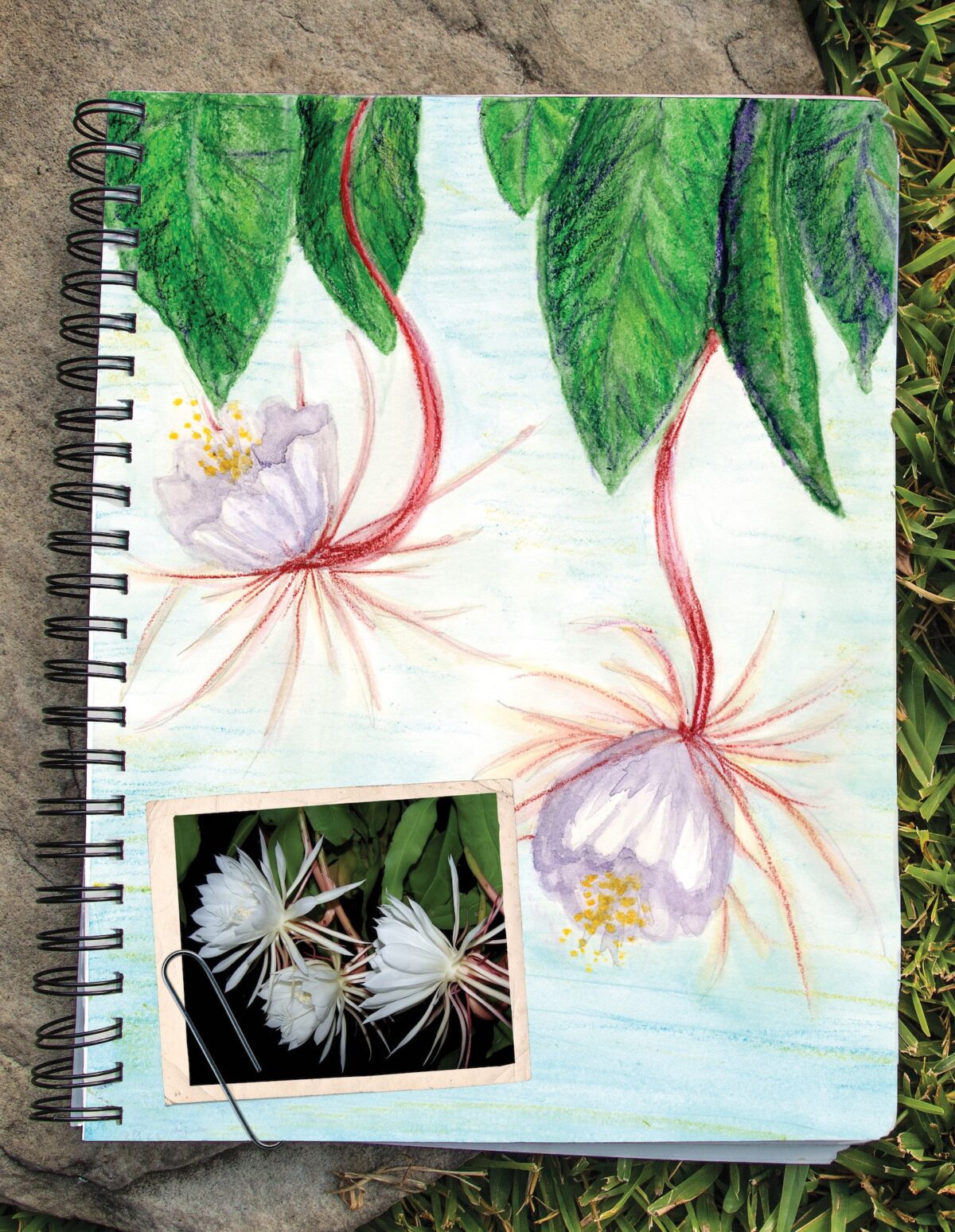
The Night-blooming Cereus (Epiphyllum oxypetalum) offers flowers the width of a saucer and a fragrance that is overwhelmingly intoxicating. If you desire to own a houseplant that requires minimal attention and presents a flower fit for royalty, look no further. This plant, also known as the Queen of the Night, does not require a green thumb to maintain. It blooms for only one night, and many plant-lovers host blooming-event parties to partake in the splendor. That’s right, it’s only for a night — but it’s worth it. Trust me.
The plant is available through a number of online plant retailers or through a friend who is willing to cut from an existing plant. They’re more common than one might think. This plant has two types of stems. One grows erect and resembles a green twig, while the other type is flattened and appears as a succulent, flattened leaf. Cuttings from either type may be used, but I prefer using the flattened “leaves.” Botanically they are stems, and they are easy to trim. Regardless of what type of cutting, let it air dry for a day or two before starting a new plant. Simply place the trimmed piece with end closest to the original plant in a glass of water or in a small pot with soil. This plant grows best in a well-drained sandy soil, but can be grown in just about any common soil type. Be careful not to overwater. If you use a soil that holds water too effectively, the roots will rot and the plant will suffer. Overwatering is about the only way to kill the plant other than freezing temperatures — it’s a tropical cactus, and must be treated as such.
Now, before you run out and buy one and begin preparations for your bloom party, be aware that time is required to get your plant from a small cutting to maturity where flowering is possible. And, even when it’s mature, you’ll need to create conditions ideal for it to bloom — this is the tricky part, but rewarding if you’re successful. It’s a costly endeavor for the plant to bloom so vividly. Once you witness the blooms, you’ll understand, but it takes substantial energy and, as such, is used as a mechanism of survival. So, if your plant is green, healthy and happy, don’t expect to see the beautiful flowers.
The trick to persuading the plant to produce flowers each year is to let it endure a period of stress. I like to wait until the full heat of summer to expose my plant from the part-sun conditions it normally endures as a hanging plant on my porch to full sun conditions. In a few days, you will notice the plant turning yellow (burning) from too much sun exposure. Once the yellowing is clearly evident on the majority of the plant, but not all, I water the plant and place it back on the porch. This sun stress, plus keeping it root-bound in a smaller pot, provides just enough hardship for the plant to provide blooms each year.
I highly recommend growing this houseplant. My wife and I love ours and, each year, we wait up to witness the blooms. Not only are they easy to keep alive, they are easy to share with friends. For any questions or comments about this plant, send me an email at [email protected].
STORY Nathan Beane
PHOTOGRAPHY Nathan Beane
Illustration by Mary Kalusche
